The quiet ingredient. No dramatic claim, a narrow and specific finding, and the most consistent biological story of the six.
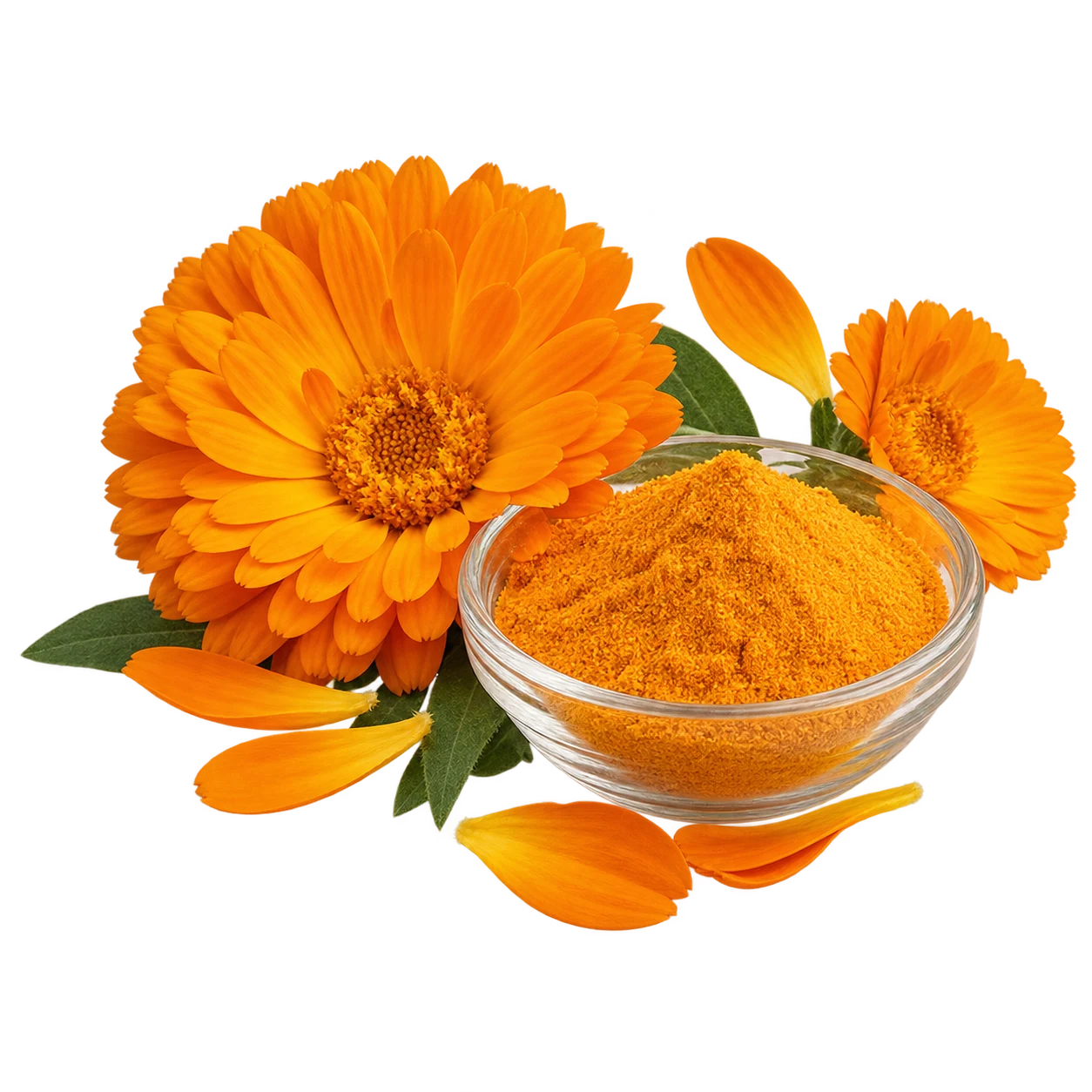
Marigold extract comes from the petals of Tagetes erecta, the tall orange marigold grown commercially across India, Mexico and China. It is in this bottle for two carotenoid pigments: lutein and zeaxanthin. Marigold petals are simply the richest and cheapest commercial source of them, which is why almost every lutein supplement on the shelf is a marigold lutein supplement whether or not it says so on the front.
Lutein has been familiar in eye health for decades. It concentrates in the macula, the small central region of the retina, where it absorbs blue light and acts as an antioxidant. That part is long established.
The newer and more interesting finding is that lutein does not stop at the eye. It accumulates in brain tissue too — measurably, and in proportion to how much is in the diet. Post-mortem work has found lutein concentrations in the brain tracking with cognitive scores recorded while people were alive. That is an association rather than proof of cause, but it is what prompted anyone to run a trial at all.
The study behind lutein cognitive support is a 2017 randomised, double-masked, placebo-controlled trial in community-dwelling older adults, mean age around 73. Fifty-one participants were analysable. They took 12 mg of combined lutein and zeaxanthin daily, or placebo, for a full twelve months.
The supplemented group performed better on a complex attention task than the placebo group. Not on everything measured — on that. The honest description is a narrow benefit on one kind of mental work, in a small sample, over a year.
The twelve months are not incidental. Carotenoids accumulate slowly in tissue; that is simply how they behave. A trial of this ingredient could not have been run over six weeks and found anything, because six weeks is not long enough for the tissue concentration to change.
Of the six ingredients in this formula, lutein is the quiet one. It has no dramatic claim attached to it, a modest and specific finding behind it, and the most consistent biological story of the lot.
Macular pigment density — how much lutein and zeaxanthin sit in the retina — can be measured non-invasively, and it correlates with brain levels. That gives researchers something unusual in this field: a visible marker for a tissue concentration they cannot otherwise see.
Intake in most Western diets is low. Estimates put typical consumption at one to two milligrams a day against the twelve used in the trial. The dietary sources are not exotic — cooked greens are the dense ones, with spinach and kale well ahead, and egg yolk gives up what it has readily because the fat it travels in is already there. The gap between one or two milligrams and twelve is the argument for a lutein supplement for seniors, and it is a reasonable one.
As lutein antioxidant support goes, this is a rare case where the mechanism, the measurable marker and the trial outcome all point the same way.
Lutein is fat-soluble, like curcumin, so the same rule applies: with a meal, not on an empty stomach. Absorption improves several-fold in the presence of dietary fat.
What to expect is nothing, for a long time. This is the slowest ingredient in the formula and the one least likely to produce any sensation at all. If you are judging a product containing lutein on how you feel in week three, you are measuring the wrong ingredient on the wrong timescale.
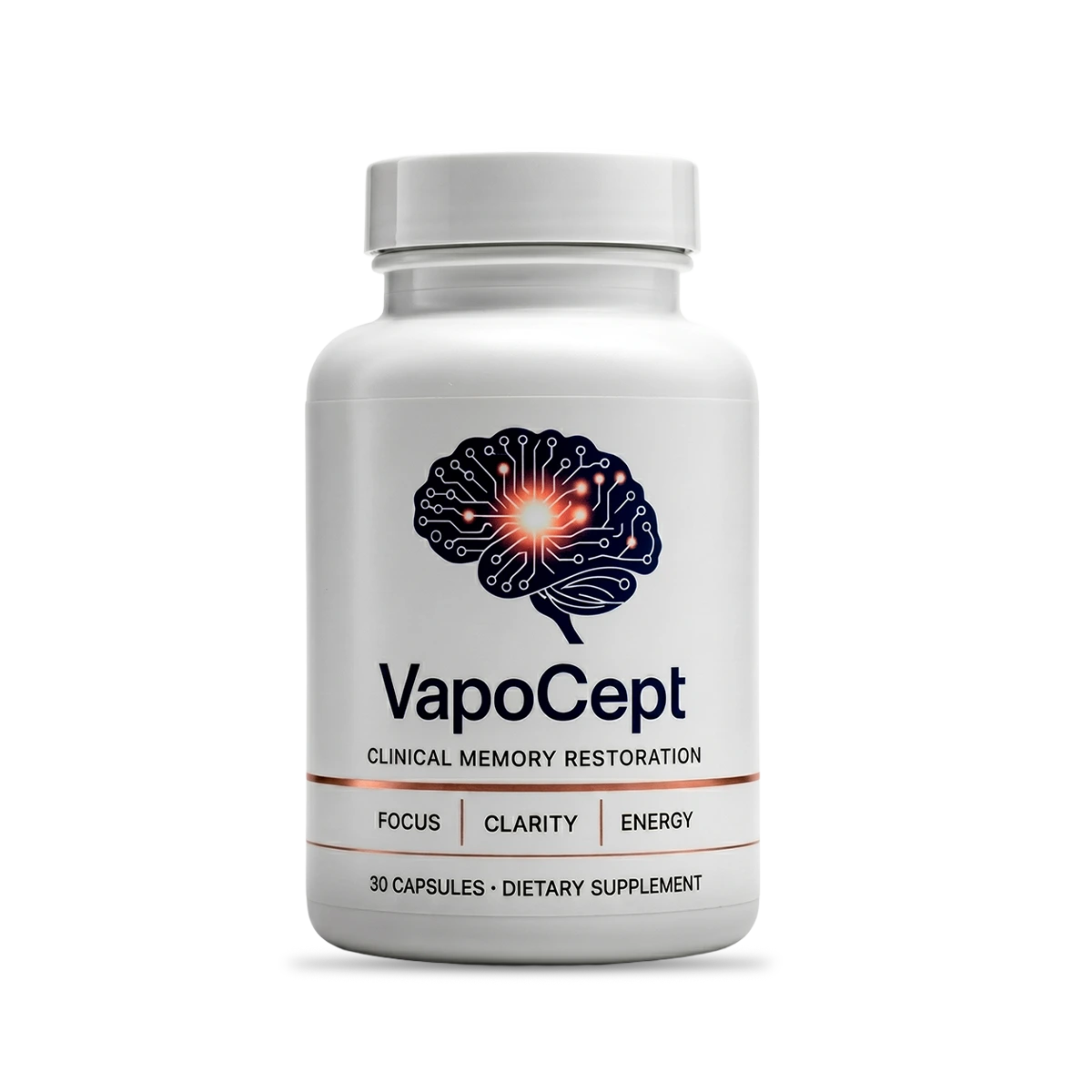
VapoCept lutein arrives through marigold extract, named on the panel with its own amount. Anyone comparing products should know that marigold extract and lutein supplement describe the same thing from different ends — one names the plant, the other names the compound.
Of the three antioxidant contributors in this formula, marigold has the longest trial behind it and the narrowest claim. We would rather describe it that way than inflate it.
Per-serving amounts for every active are printed on the physical supplement facts panel and shown at the official checkout. If a figure you read elsewhere does not match the panel on your bottle, the panel is the one to trust.
Lutein, curcumin and the carotenoids all absorb better alongside food. That is the entire protocol — one capsule, taken with a meal.
See package optionsIt supplies lutein and zeaxanthin, two carotenoids that accumulate in the retina and in brain tissue. A twelve-month randomised trial in older adults found an advantage on a complex attention task at 12 mg daily of the combined carotenoids.
Effectively, yes. Marigold petals are the main commercial source of lutein, so a marigold extract supplement and a lutein supplement are usually the same product described from different ends. One names the plant, the other names the compound.
Estimates for typical Western diets run around one to two milligrams a day. The trial that found a cognitive benefit used twelve. Cooked spinach and kale are the dense sources, and egg yolk is absorbed particularly well because it comes packaged with fat.
Months, not weeks. Carotenoids accumulate slowly in tissue, which is why the trial behind this ingredient ran for a full year. It is the slowest-acting ingredient in this formula and the least likely to produce any noticeable sensation.