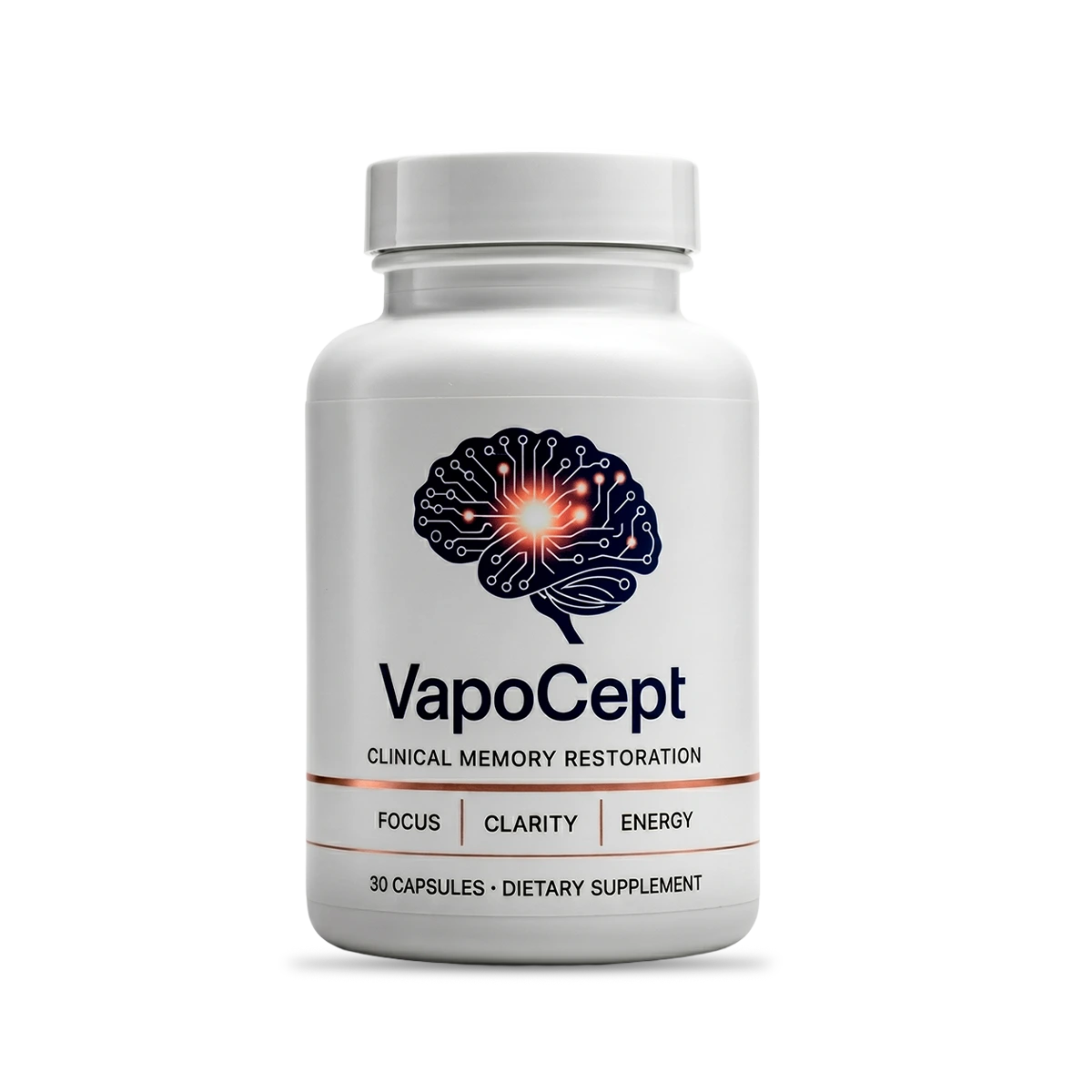
Six actives, three inactives, nothing hidden behind a blend name. Here is the whole list, what each one contributes, and which two have no cognitive research at all.
Nine ingredients in total: six actives and three inactives. No proprietary blend, no “cognitive matrix,” nothing pooled behind a trademark to stop you reading it. That is unusual enough in this category to be worth stating first.
Serving size: 1 capsule · 30 capsules per bottle
| Active ingredient | Source |
|---|---|
| D-Glucosamine Sulfate Potassium Chloride | Amino sugar |
| Ginkgo Biloba Extract | Leaf |
| Turmeric Extract | Rhizome |
| Marigold Extract | Flower |
| Green Tea Extract | Leaf |
| Bamboo Extract | Stem |
The table below is the short version. Each ingredient has a page of its own with the trials, the sample sizes and the limitations written out.
| Ingredient | What it contributes | Strongest evidence | Timeline |
|---|---|---|---|
| Ginkgo Biloba | Small-vessel circulation; free recall | 188 healthy adults, 6 weeks, improved appointment recall | Weeks |
| Turmeric | Curcumin; antioxidant and anti-inflammatory | 40 adults, 18 months, better memory and attention scores | Many months |
| Marigold | Lutein and zeaxanthin in retinal and neural tissue | 51 older adults, 12 months, complex attention task | Months |
| Green Tea | EGCG, L-theanine and a little natural caffeine | Crossover trial, attention switching within hours | Same day |
| Bamboo | Silica for connective tissue | No cognitive trials | — |
| D-Glucosamine | Amino sugar; joint and structural nutrition | No cognitive trials | — |
Four of six have randomised human data behind them at a cognitive outcome. Two do not. Writing that in a table on the ingredients page, rather than burying it, is the point of this site.
You will see this described as a VapoCept botanical formula or a six-botanical product. It is not quite right. Ginkgo, turmeric, marigold, green tea and bamboo are plant extracts. D-Glucosamine Sulfate Potassium Chloride is an amino sugar, which is a different category of thing altogether.
It is a small correction and we keep making it for three practical reasons. It matters to anyone with a shellfish allergy, since most commercial glucosamine comes from crustacean shells. It matters to anyone eating plant-based. And it matters to anyone trying to work out whether a page describing this product has actually read the label, which is the quickest test of a supplement page there is.
If you have seen it called a VapoCept amino acid formula somewhere, that is wrong in the other direction — an amino sugar is not an amino acid. The formula page deals with that confusion and where it comes from.
Inactive ingredients are the half of the panel nobody reads, and on this product they carry the single most consequential fact about who can take it.
By the ordinary meaning, yes: the actives are plant extracts and a naturally occurring amino sugar, there are no added stimulants beyond the trace of caffeine that comes with green tea, and it is made in a GMP-certified, FDA-registered facility. As a herbal brain supplement or botanical brain supplement it is a reasonable description of five of the six ingredients.
What “natural” does not mean is tested, approved or guaranteed to work. No dietary supplement is FDA-approved, because supplements are not reviewed for safety or efficacy before they go on sale. That applies to every bottle on this shelf and to this one as much as any.
If you are checking VapoCept ingredients against a medication list, print the panel above and take it to a pharmacist. The ingredient worth flagging is ginkgo, because of its effect on bleeding time — the detail is on the Ginkgo page.
If you are trying to work out what is really in VapoCept because two sources you found disagree, the formula page is the one you want.
Every amount printed on the panel rather than pooled into a blend — so the formula can be checked before you start, not after.
See package optionsSix actives: D-Glucosamine Sulfate Potassium Chloride, Ginkgo Biloba Extract, Turmeric Extract, Marigold Extract, Green Tea Extract and Bamboo Extract. Three inactives: a bovine gelatin capsule, magnesium stearate and microcrystalline cellulose. Nine in total, with no proprietary blend.
No. Five of the six actives are plant extracts; D-Glucosamine Sulfate Potassium Chloride is an amino sugar, which is not a botanical. The accurate description is five plant extracts plus one amino sugar, and that distinction matters to anyone with a shellfish allergy or eating plant-based.
Each active is printed with its own amount on the physical supplement facts panel and shown at the official checkout, rather than pooled into a blend. That is what makes the formula checkable against a medication list.
No. The capsule shell is bovine gelatin, so it is unsuitable for vegetarian and vegan diets and carries no halal or kosher certification, regardless of how plant-based the contents are.
Four of the six have randomised human trials at a cognitive outcome: ginkgo, turmeric, marigold and green tea. Bamboo and D-Glucosamine do not, and both are described that way throughout this site rather than given borrowed credit.