Turmeric is in this formula for curcumin. Whether curcumin does anything at all depends almost entirely on a question most labels never answer.
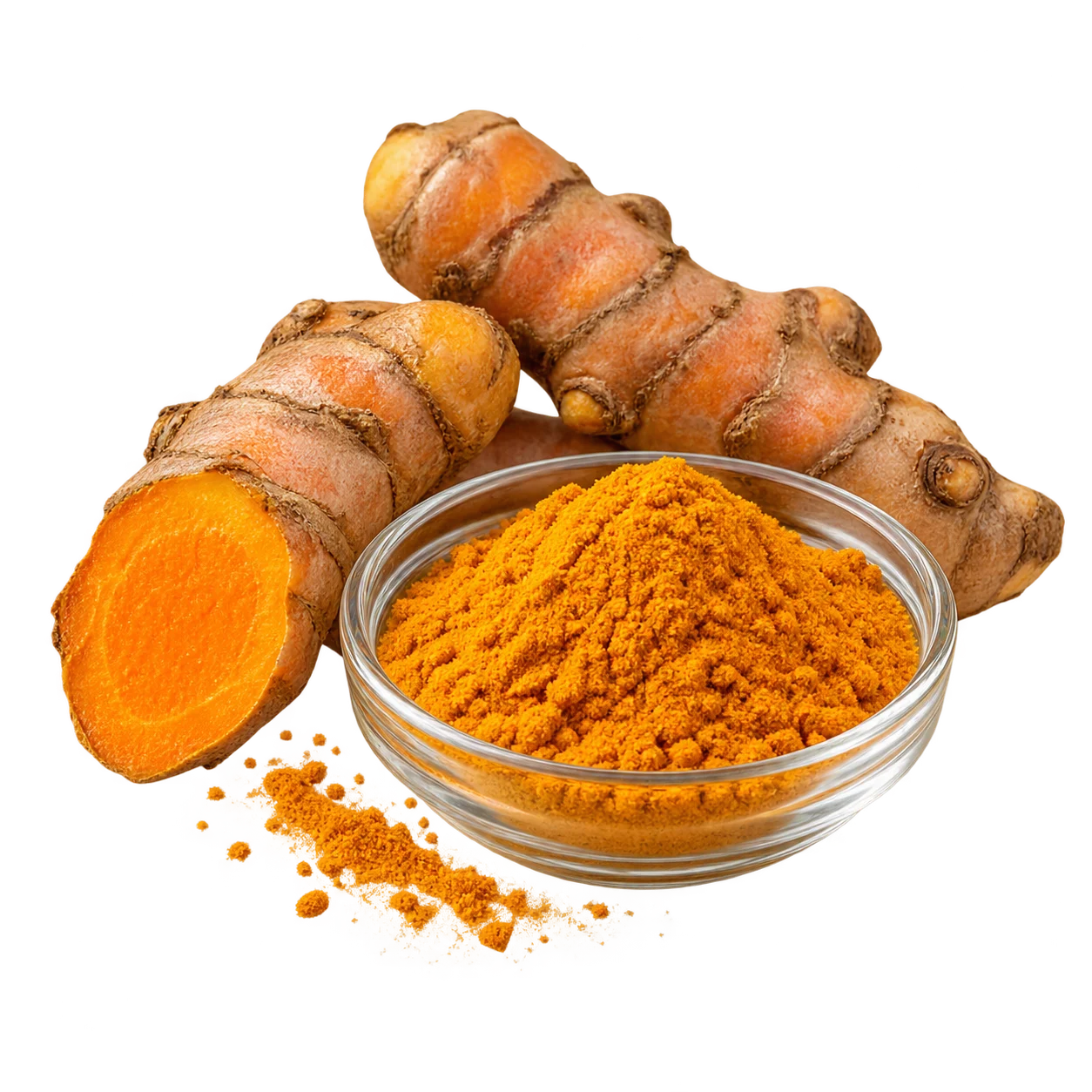
Turmeric is the rhizome — the underground stem — of Curcuma longa, a relative of ginger. Ground into the familiar yellow powder it has been a kitchen staple for several thousand years. What a turmeric brain health supplement is really after is a group of compounds called curcuminoids, of which curcumin is the principal one.
Here is the problem that defines this entire ingredient: raw turmeric powder is roughly 2 to 5 percent curcuminoids by weight, and curcumin on its own is notoriously badly absorbed. Swallowed plain, most of it never reaches the bloodstream. It is poorly soluble in water, it is broken down quickly in the gut wall and liver, and what survives is cleared fast.
Which means a label reading “turmeric 500 mg” tells you very little. The question is what form, and whether anything has been done about absorption — a phospholipid complex, a micellar or nanoparticle preparation, piperine from black pepper, or at the very least directions telling you to take it with food and explaining why.
The strongest evidence for curcumin cognitive support comes from a 2018 double-blind, placebo-controlled trial. Forty non-demented adults aged 51 to 84 took 90 mg of a bioavailable curcumin formulation twice daily — or placebo — for eighteen months.
The curcumin group showed better memory and attention scores over the period than the placebo group. A subset also underwent brain imaging, which found differences in amyloid and tau signal in regions associated with mood and memory.
Three things are worth holding onto about that study. It is small — forty people is a pilot, not a verdict. It is long — eighteen months, which tells you what sort of timescale turmeric for brain health operates on. And it used a bioavailable formulation, not kitchen turmeric, which is exactly the distinction the previous section was about.
Quoting an eighteen-month bioavailable-curcumin result next to a plain-extract product is the most common sleight of hand in this corner of the supplement market. Check which form the label names.
Curcumin is a genuine antioxidant and a genuine anti-inflammatory, and that is the mechanism usually invoked for turmeric for healthy aging. Oxidative load and low-grade inflammation both rise with age and both are plausibly relevant to brain tissue.
What has to be said alongside it: antioxidants for brain health is the broadest and softest claim in this entire category. There is no sensation attached to the process. You cannot feel oxidative load falling. It makes the claim impossible to disprove in your own body, which is precisely why it is the one sold hardest.
A turmeric memory supplement is a reasonable thing to take. It is not a reasonable thing to expect to notice next week.
Curcumin is fat-soluble. The single most useful thing you can do with any turmeric cognitive support product costs nothing: take it with a meal that contains some fat. Eggs, yoghurt, olive oil, nuts, cheese — it does not need to be much. Swallowed with water on an empty stomach, a good share of what you paid for simply passes through.
Black pepper is the other classic pairing. Piperine slows the liver's clearance of curcumin, which is why the two have been eaten together for centuries and why you will see piperine on a lot of curcumin labels.
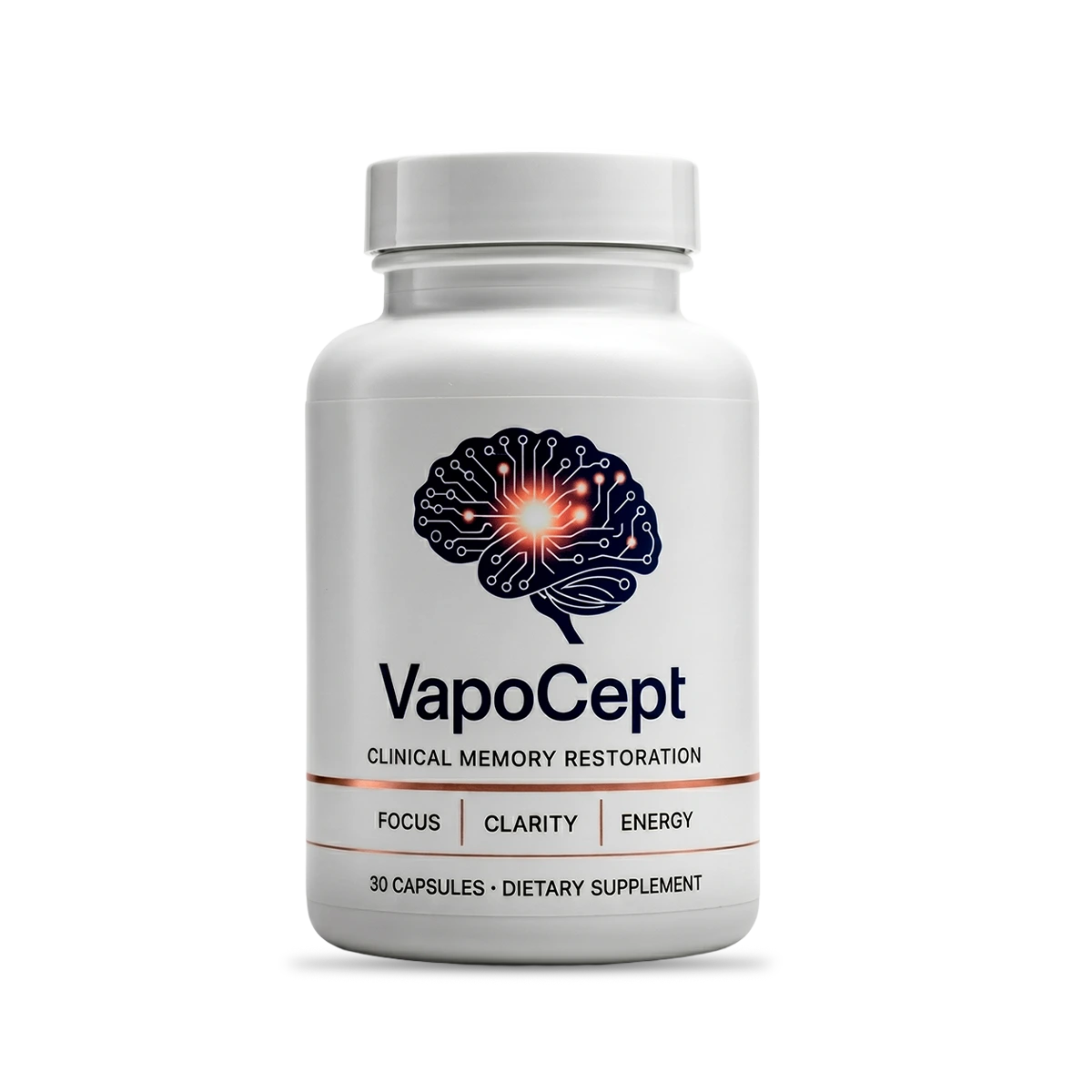
Turmeric sits in VapoCept® as one of three antioxidant contributors, alongside green tea and marigold, with the per-serving amount printed on the panel rather than hidden in a blend. The formula's once-daily, take-with-food instruction exists in large part because of this ingredient and the two other fat-soluble ones.
If you are shopping for a curcumin brain health supplement on its own, the questions to ask are the same ones this page has been asking: which form, what percentage of curcuminoids, and has anything been done about absorption.
Per-serving amounts for every active are printed on the physical supplement facts panel and shown at the official checkout. If a figure you read elsewhere does not match the panel on your bottle, the panel is the one to trust.
Turmeric, green tea and marigold each appear on the VapoCept panel with their own amount. No pooled blend, nothing to guess at.
See package optionsThere is one reasonably designed trial behind the claim: forty non-demented adults aged 51 to 84 took 90 mg of a bioavailable curcumin form twice daily for eighteen months and scored better on memory and attention than placebo. It is a small study over a long period, which is a fair summary of how strong the evidence is.
Turmeric is the whole rhizome, roughly 2 to 5 percent curcuminoids by weight. Curcumin is the principal curcuminoid and the compound the research is about. A label naming turmeric without saying anything about curcuminoid content or form is not telling you much.
Curcumin is fat-soluble and absorbs poorly on its own. Taking it alongside a meal that contains some fat raises how much reaches the bloodstream substantially, at no cost. Black pepper helps too, by slowing how quickly the liver clears it.
The trial that found a benefit ran eighteen months. Nothing in the evidence supports a short-term effect, and any product promising one within days is describing something other than what has been studied.