The most useful thing you can learn about buying herbal supplements takes two minutes and applies to every botanical on the shelf.
Put two ginkgo bottles side by side. Both say 120 mg. One costs eleven dollars, the other thirty-four. Common sense says take the cheap one.
Common sense is wrong here, and the reason is that a milligram measures the weight of plant material, not the quantity of whatever in that plant does something. A gram of ginkgo leaf picked in October differs from a gram picked in June. Leaves from one grove differ from another. Dry it differently and you get a different product again.
So a label reading 120 mg of ginkgo leaf is telling you the weight of a bag of variable contents. It is not telling you the dose.
A standardised extract is processed to hit a specified concentration of named compounds, batch after batch. For ginkgo, the convention established by the research is roughly 24 percent flavone glycosides and 6 percent terpene lactones. The manufacturer tests each batch and adjusts it to land on those figures.
That is the whole of it, and it changes everything. When a trial reports that 240 mg daily improved recall over six weeks, it used a standardised extract. The number means something because the contents behind it were held constant. Quote that trial beside a bottle of unspecified leaf powder and the number is borrowed, not earned.
Standardisation is not a quality claim. It is a measurement claim. It says the contents of this capsule are known, which is the precondition for any dose figure meaning anything.
This is not a ginkgo quirk. Turmeric is sold by weight while the compound of interest, curcumin, makes up two to five percent of it — and absorbs so poorly that the preparation matters more than the weight. Green tea extract is bought for its catechin content, which varies enormously. Marigold extract is a vehicle for lutein, and the lutein figure is the one that counts.
Every time a botanical is sold by the weight of the plant rather than the quantity of the compound, you are buying an unknown. Sometimes an expensive one.
Two practical rules. First, never compare herbal products on milligrams alone — you are comparing the weights of two different things. Second, when a product cites research, check whether the form on the label matches the form in the study. A trial on a bioavailable curcumin complex does not support a plain-turmeric capsule, and a trial on standardised EGb does not support unspecified leaf.
That check takes thirty seconds and eliminates most of what is wrong with this category.
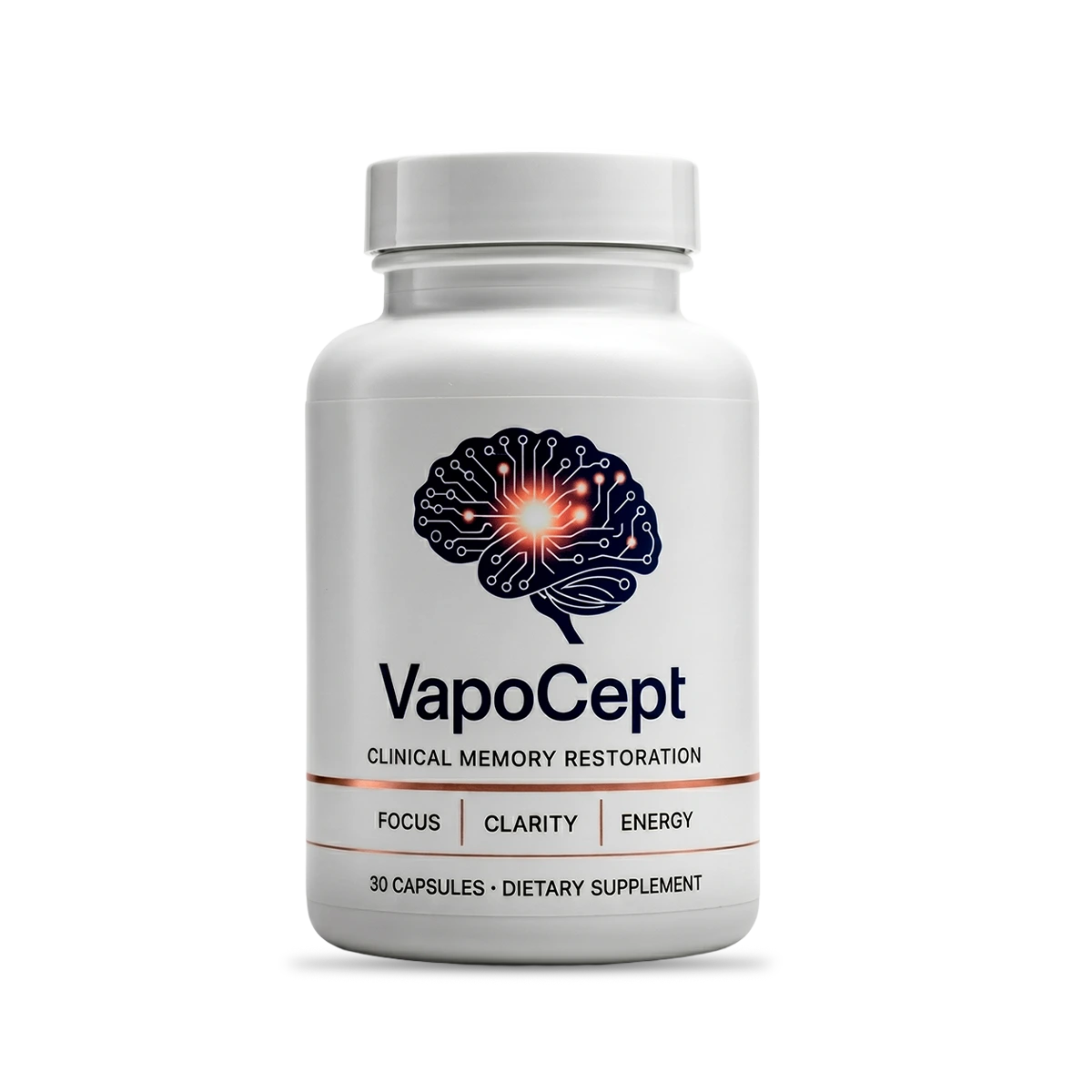
No pooled blend and nothing vague — the VapoCept panel prints every active with its own amount so you can check it.
See package optionsThat the extract has been processed and tested to contain a specified percentage of named compounds in every batch. For ginkgo the convention is about 24 percent flavone glycosides and 6 percent terpene lactones, because that is what the clinical research used.
Not on its own. A milligram measures the weight of plant material, which varies in potency by harvest, region and processing. Without a standardisation percentage, a larger number just means more of something unspecified.